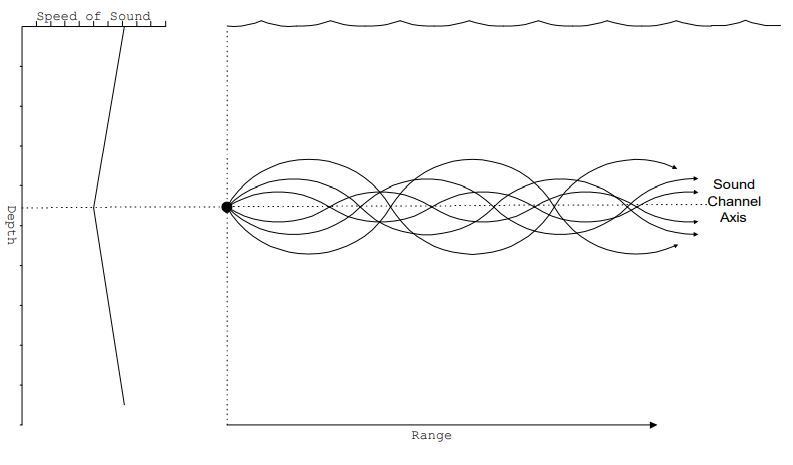
Sound velocity profiles are crucial tools for anyone wanting to use underwater acoustics! Variations in ocean water impact how fast sound travels in water. As you go deeper in the water column, changes in water attributes such as temperature, salinity, pressure, and pH cause the speed which sound travels in water to change. This changing sound velocity gradient causes sound waves to bend in unusual ways. A sound velocity profile (SVP) reflects how the speed of sound changes with depth by displaying the measured speed of sound as a function of the depth. Engineers using acoustic modems use SVPs to ensure they can communicate with underwater vehicles using acoustic modems. Warships and submarines use them to effectively use their sonars to identify threats and navigate. Sound velocity profiles are obtained by taking SVP soundings in the field. That's where SeaSound comes in. For applications where low fidelity is acceptable, get a predicted SVP for yourself in the comfort of your own home rather than traveling to the middle of the ocean to make the measurements! Check out the sources linked below for more learning. Also check out the figures below which demonstrate what an SVP looks like as well as how gradient SVPs cause sound bending in water columns.